Темные башни
The Millennium Tower skyscraper in San Francisco is rapidly sinking and tilting. How strong and safe are the Moscow skyscrapers that have appeared in the city in recent years? Will they have to be demolished like five-story buildings?
The Moscow City business center was the first high-rise project in Russia, construction of which began in 1995 and is still ongoing. Since such buildings had never been built in the country before, especially in such quantities, there were many mistakes made in the design of the business center - for example, residents of the City suffered from parking problems for a long time. The mistakes were later taken into account, and today, the construction of skyscrapers is a routine for developers.
Moscow Towers
The first exclusively residential high-rise project was the "Scarlet Sails" complex by the company "Donstroy" (constructed between 2001 and 2016), consisting of five buildings at 21-48 floors (179 meters), says Daria Samoilova, Head of the Real Estate Department at Welhome. By 2006, the same developer built the 57-story Triumph Palace residential complex in the Stalinist style (currently the tallest residential complex in Moscow, reaching a height of 264.5 meters including the spire), and later, the Sparrow Hills residential complex (48 floors, height - 192.1 meters, built in 2004) and the Mosfilmovskaya residential complex (54 floors, 213.3 meters, built in 2010). In 2012, Capital Group, which was involved in the construction of Moscow City, built the Trikolor residential complex (58 floors, 192 meters).
Currently, according to the company "MIEL-Novostroiki", the total area of housing in new high-rises is about 155,000 square meters. According to Welhome, there are approximately 1,300 apartments and condos for sale in skyscrapers - both completed and under construction. In the coming years, according to realtors, many more towers will enter the market - four in the Not Boring Home and Spa residential complex, one as part of the Silver residential complex, and three in the Capital Towers.
High-rise construction in Moscow is a trend: there are almost no available land plots left, and the city does not prohibit the construction of skyscrapers. "So in the coming years, there will be more skyscrapers in Moscow," believes Ekaterina Rumyantseva, Chair of the Board of Directors of Kalinka Group. Overall, this is an international trend, notes Maria Litinetskaya, Managing Partner of Metrium Group. "Around the world, living in skyscrapers is considered the most prestigious. Skyscrapers always attract interest and have a stable demand from buyers," she explains.
Among the main advantages of "sky" living are the almost complete absence of urban noise on the upper floors, breathtaking views from panoramic windows, and clean air outside: according to ecologists' research, the smog of the metropolis only reaches about 25 floors.
However, as the experts interviewed by Dom note, it is usually not possible to breathe street air in a skyscraper because the windows either do not open at all or open partially due to strong wind at high altitudes. In exchange for regular ventilation, residents receive high-quality ventilation and air conditioning systems.
High-rise troubles
In addition to sealed windows, "high-rise" residents may face other problems. One of the most dangerous is difficulties in evacuation during fires. It is for this reason that fire safety is carefully considered in any skyscraper. Another downside can be the large number of residents: congestion during peak hours can occur in skyscrapers - in Moscow City, you can wait for an elevator for up to ten minutes in the morning and evening.
"In addition, not everyone can afford to live at heights from a health perspective, as people with low or high blood pressure may have problems," adds Maria Litinetskaya.
According to Natalia Shatalina, CEO of MIEL-Novostroiki, fear of confined spaces can develop in a skyscraper, and some people find it inconvenient to live in a building that sways in the wind.-
A skyscraper cannot sway in the wind, of course. It is unlikely in most cases, and the settling of a building is a unique case in San Francisco. Currently, the 58-story Millennium Tower, completed in 2009, has settled more than 40 centimeters from its original level and has become a giant "Leaning Tower of Pisa", leaning approximately 35 centimeters off its vertical axis.
As reported by the media, the skyscraper is settling because since the start of its construction, the geological situation in this area has significantly changed due to the construction of other nearby towers - the soil has become more loose. The foundation piles were not driven deep enough, so now they will have to be extended to a solid base.
In Moscow, foundation piles are usually driven to the necessary depth. For example, as the general director of the "Federation Tower" complex, Mikhail Smirnov, explains, the foundation piles of the "Federation" skyscrapers, as well as other buildings in Moscow City, are driven to limestone, which means the buildings stand on solid rock - they will not settle or tilt.
Infinity symbol
The strength of the buildings also does not raise any doubts. "A skyscraper built of monolithic reinforced concrete has no service life. The service life of high-quality monolithic reinforced concrete can be considered as conditionally infinite. However, different elements of the buildings, such as facades, floors, engineering systems, and others, do have a service life. For them, clear renovation periods are established, which depending on the quality of each system can vary within 10-50 years or more," explains Vyacheslav Sosinsky, the director of project implementation department at GORN Development.
The expert notes that the most difficult and expensive part of renovating skyscrapers is replacing individual parts of the load-bearing metal structures. However, after decades, replacement is necessary in any case: the metal is subjected to corrosion at the points of connection to other structural elements, as well as in open areas due to precipitation. In the Eiffel Tower, which is essentially a skeletal skyscraper, a significant portion of the original metal parts has been replaced.
With proper care and timely repairs, skyscrapers, just like any other buildings, including five-story ones, will not significantly deteriorate for a much longer period of time. Preservation of the facade is crucial to achieving a conditionally infinite service life, says Mikhail Smirnov.
"The facade is the main protector of buildings from precipitation, in our skyscraper, it is panoramic glazing. The surface of the tower's glass reflects ultraviolet radiation, maintaining an optimal temperature inside the building. In terms of density, the glass is close to the heat resistance parameters of a brick wall, thus all internal structures are reliably protected from moisture," he points out.
Therefore, skyscrapers are unlikely to be demolished after 50 years. In New York, skyscrapers built in the 1930s are still standing, and no one plans to level them to the ground. According to Vyacheslav Sosinsky, a skyscraper can only be demolished if the plot can be used more profitably from a commercial point of view: for example, replace a 120-meter building with a 300-meter one. In New York, 300-meter towers are mostly built now, and the cost per square meter in them can justify not only the demolition of the old building but also the construction of a new one in its place.
In Singapore, as Mikhail Smirnov points out, skyscrapers are demolished even after 15-20 years of operation. "But this is not because they have exhausted their service life, but because they have become morally outdated, and they want to build something more modern and aesthetically attractive in their place," he explains.
However, for now, no one is talking about demolishing skyscrapers in our country. Moscow City has already become one of the symbols of the city. Time will tell how events will unfold further.


Read also

Екатерина Румянцева выступила на «Инсфорум 25»
15–16 ноября 2025 года в Москве, на площадке Main Stage прошел Инсфорум 25 —событие для страховых агентов и риелторов.
- 104
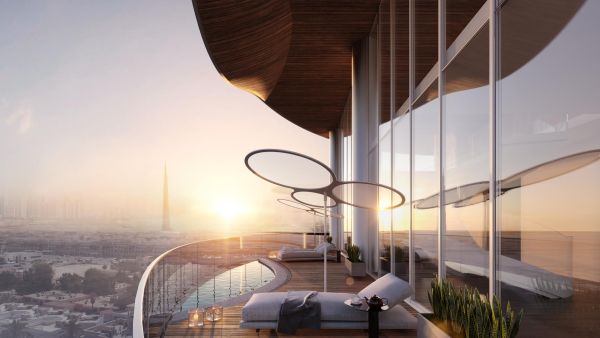
Рекорд Kalinka Middle East: В Дубае арендовали пентхаус за 5,2 млн AED год
Kalinka Middle East заключила сделку на аренду пентхауса с пятью спальнями в Mr. C Residences на сумму 5 200 000 AED в год
- 225
- 2 min
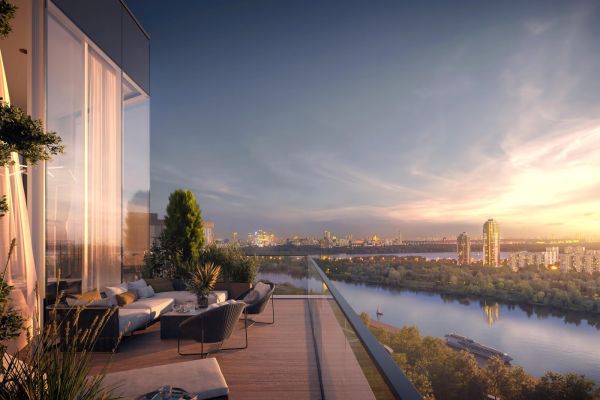
Kalinka Russia – партнер по реализации «Клубного города на реке Primavera»
Kalinka Russia заключила договор на ко-эксклюзивную реализацию премиального проекта «Клубный город на реке Primavera», который расположен в самом живописном месте зелёного полуострова Покровское-Стрешнево на излучине Москвы-реки в экологически чистом районе на северо-западе Москвы.
- 415
- 3.5 min
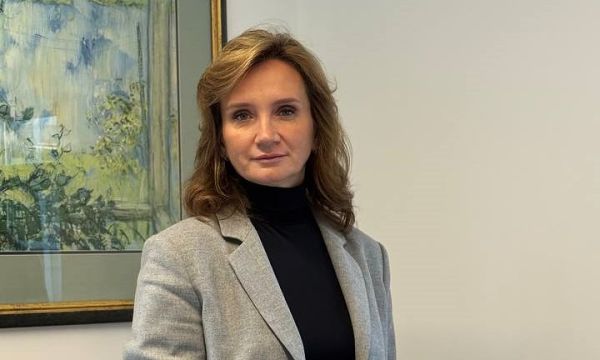
Кадровые изменения в Kalinka Russia
В Kalinka Russia произошел ряд кадровых изменений в руководстве компании.
- 899
- 1.5 min
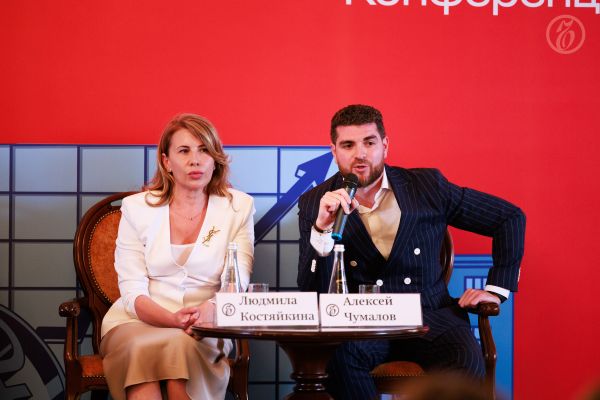
Элитный рынок без границ: что выбирают состоятельные покупатели?
Алексей Чумалов выступил спикером на конференции Коммерсантъ.
- 840
- 0.5 min
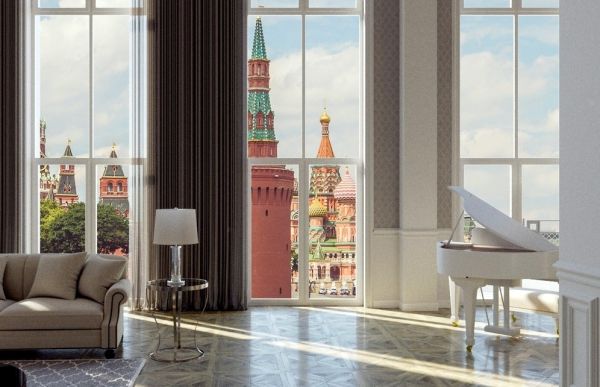
Стоимость «трофейной» недвижимости доходит до 9 млрд рублей
Доля таких проектов не превышает 5% от общего объема предложения на рынке Москвы.
- 1082
- 1.5 min
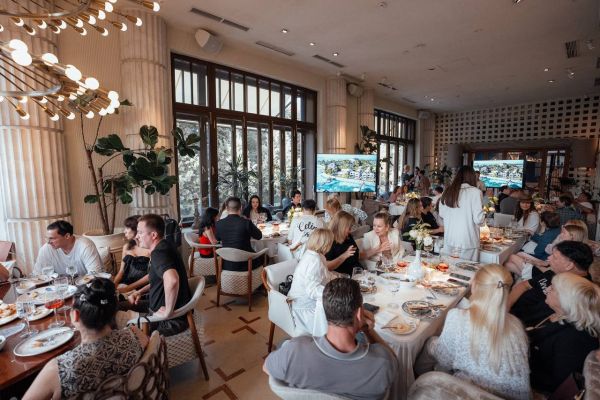
Бизнес-ужин Kalinka Private Club
3 июля прошла закрытая встреча, в центре вечера был проект SHA Emirates.
- 1170
- 0.5 min
Иммиграционные программы
Экосистема Kalinka запустила новое направление – иммиграционные программы.
- 1564
- 0.5 min
During the year, Russians' demand for housing increased by 25% in four directions
According to Kalinka, the growth in demand for foreign real estate is noted in Thailand, Bali, Montenegro and Georgia.
- 1683
- 2 min

The magic of Kalinka's fragrance at home!
This year, the Kalinka Ecosystem team approached the choice of New Year's gifts for partners and customers with special trepidation.
- 1748
- 1 min
Stay up to date with the latest news
We promise to send only interesting and important articles.